Synthetic Turf Engineered for Clay Soil Drainage
Artificial Turf in Denver for low-maintenance lawns on lots where red clay and humidity challenge natural grass performance
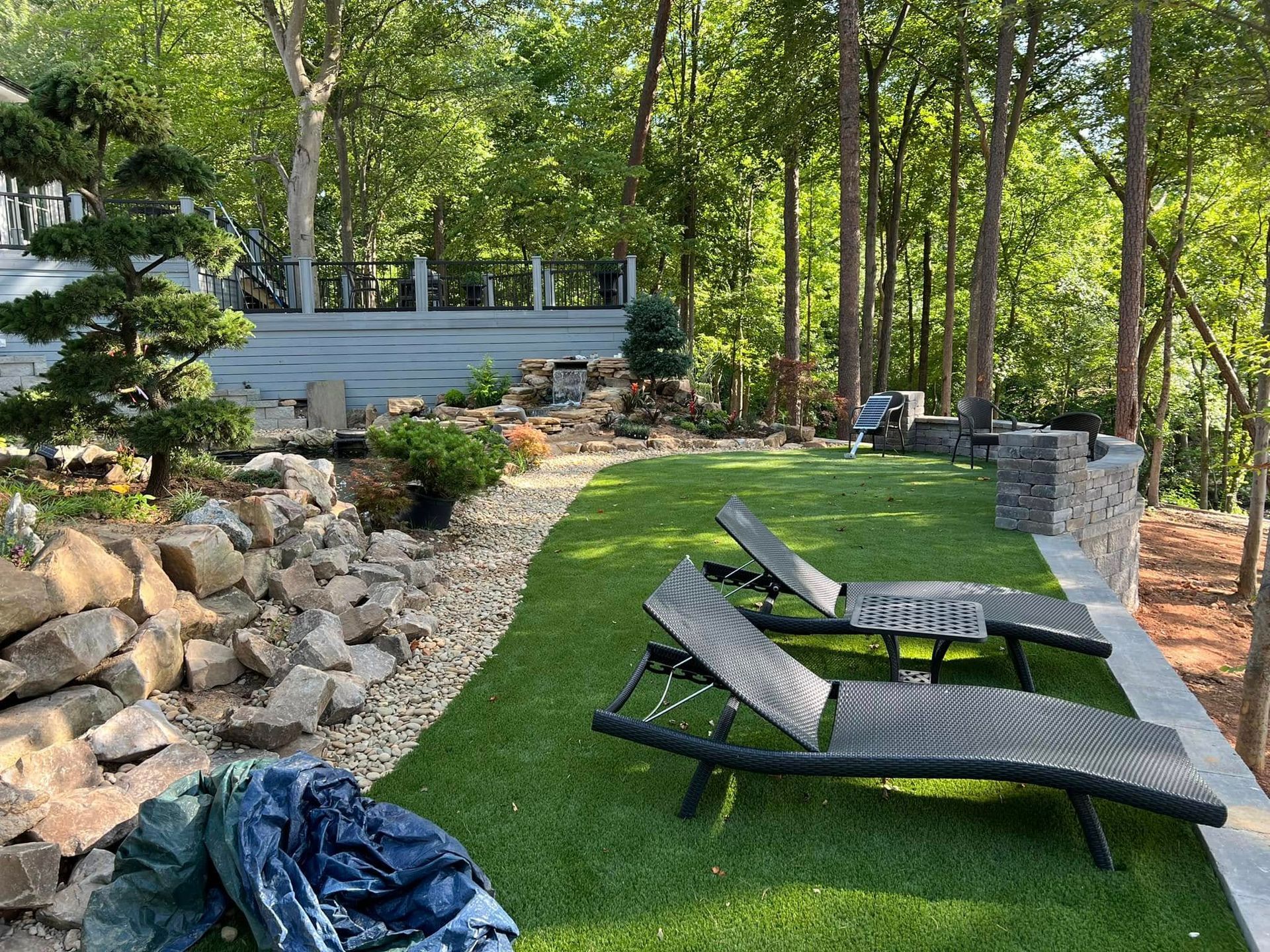
Artificial turf eliminates mowing, fertilizing, and irrigation maintenance, but longevity on Lake Norman's red clay soil depends on sub-base drainage engineering that prevents standing water and the odor problems it creates. You're looking at a drainage layer beneath the turf that channels water away faster than clay soil absorbs it, preventing the pooling that leads to backing failure and unpleasant smells during Denver's humid summer months. BCB Hardscape installs synthetic turf with drainage-first sub-base design, addressing the clay soil and high-humidity conditions that cause most turf installations to fail within a few years when drainage is treated as an afterthought.
The installation process involves excavating existing soil to a depth that accommodates a compacted gravel base and drainage fabric layer, creating a permeable platform that moves water vertically through the turf backing and laterally away from the installation area. Red clay holds water on the surface rather than absorbing it, so without proper sub-base engineering, rainfall has nowhere to go except pooling beneath the turf where it saturates the backing material and creates drainage failures.
Schedule a site evaluation to identify specific drainage challenges and sub-base requirements for your property's soil conditions.
Why Sub-Base Engineering Works for Lake Norman Clay Lots
Sub-base preparation starts with grading the excavated area to direct water toward existing drainage points or lower elevations on your lot, preventing water from migrating toward foundation walls or pooling in low spots. Crushed gravel is placed in lifts and compacted to create a firm surface that supports foot traffic without compressing over time, while drainage fabric prevents clay soil from migrating upward into the gravel layer and clogging drainage pathways. Turf backing includes perforations that allow water to pass through, but that drainage capacity is wasted if the sub-base beneath it can't move water away quickly.
After installation, you notice rainwater disappears from the turf surface within minutes instead of pooling for hours, and the turf stays dry enough to walk on shortly after storms end. The surface remains odor-free during humid summer months because water doesn't sit beneath the turf long enough to create anaerobic conditions where bacteria thrive. Turf blades stay upright and maintain their original texture because the backing doesn't stay saturated and heavy, which causes flattening and matting in poorly drained installations.
Turf options vary in blade height, color, and backing material, but those choices affect appearance and feel rather than drainage performance. Installation includes infill material—typically silica sand or rubber granules—that weighs down the turf and helps blades return to vertical position after foot traffic compresses them.
What Property Owners Usually Ask
Homeowners in Mooresville and Denver frequently ask about drainage performance, maintenance requirements, and how artificial turf holds up in local climate conditions.
What preparation happens before turf is installed?
Existing grass and soil are removed to the depth required for gravel base layers, typically four to six inches depending on soil drainage characteristics. The excavated area is graded to slope away from structures, then gravel is placed and compacted before drainage fabric and turf go down.
How does red clay soil affect artificial turf drainage in Denver?
Red clay absorbs water slowly and holds it near the surface, so without a permeable gravel sub-base, water pools beneath turf backing and can't escape. This creates saturation that leads to odor, backing deterioration, and turf flattening as the backing stays wet and heavy.
What maintenance does artificial turf require?
Turf needs periodic brushing to keep blades upright and occasional rinsing to remove pollen and debris, but there's no mowing, fertilizing, or irrigation. Infill material may need replenishment every few years as foot traffic and weather displace it.
When is artificial turf installation best scheduled?
Installation works year-round, but dry weather makes excavation and grading easier and allows compaction equipment to achieve better density in base layers before turf is placed.
How long does artificial turf last on clay soil?
Turf backing and blade materials typically last ten to fifteen years, but performance depends on sub-base drainage—installations without proper gravel bases on clay soil often develop drainage failures and odor problems within three to five years, while properly engineered bases extend usable life to the turf material's full lifespan.
BCB Hardscape installs artificial turf across the Lake Norman area with sub-base drainage systems built for red clay and high-humidity conditions. Request a site assessment to determine gravel depth and drainage routing for your yard's specific soil type and grading.