

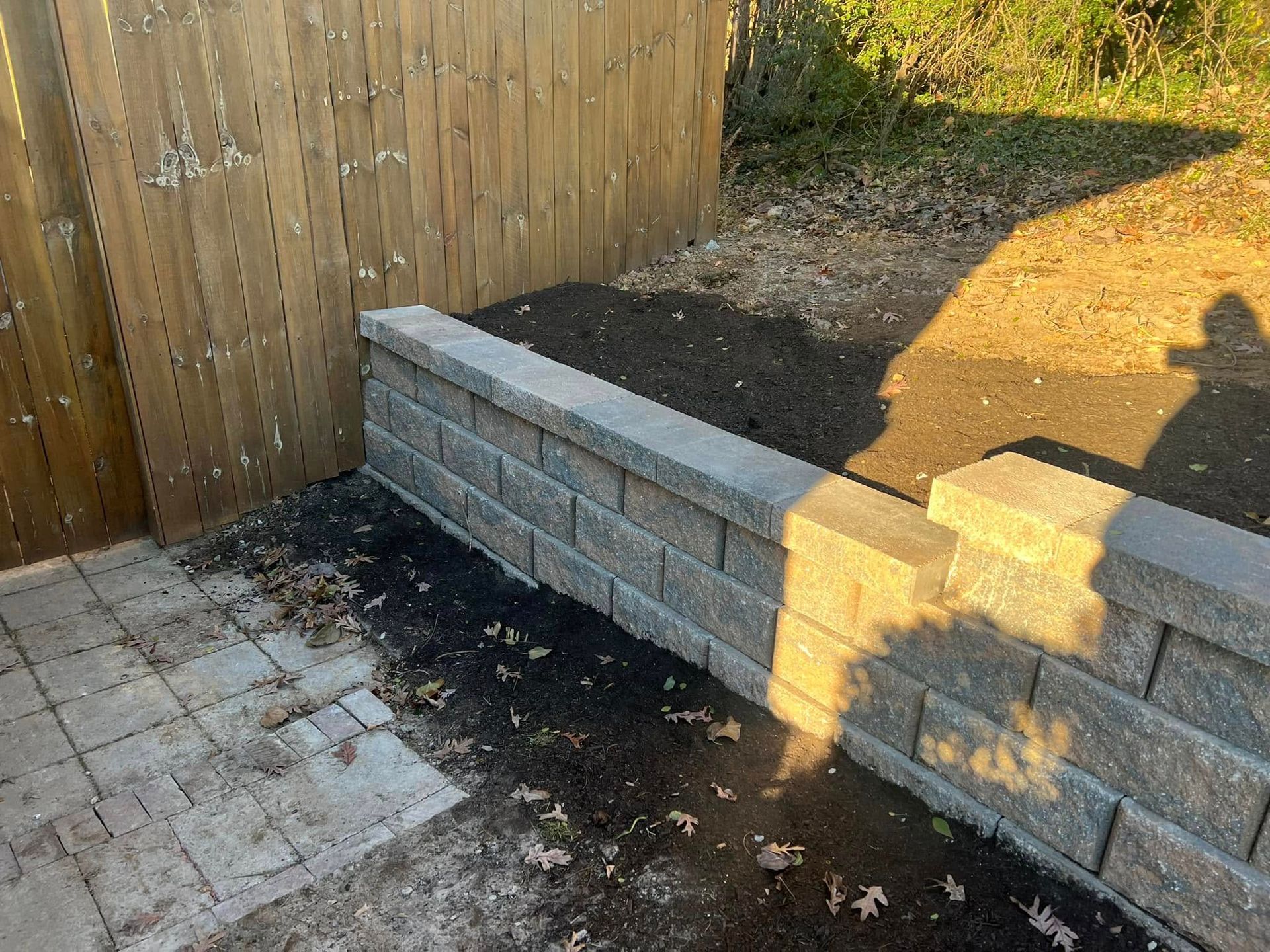
Walls Built to Hold Against Clay Pressure
Retaining Walls in Denver for sloped yards and hillside lots where red clay hydrostatic pressure requires engineered drainage and reinforcement
Red clay soil on sloped Lake Norman properties builds hydrostatic pressure behind retaining walls during storms, pushing structures outward and causing failure within a few seasons if drainage isn't built into the system from the start. You're looking at walls on Sherrills Ford hillside lots and Denver grade changes where erosion control and usable yard space depend on structures that manage water as much as they hold soil.
BCB Hardscape approaches retaining wall installation with drainage and reinforcement decisions made before materials are ordered, treating these as structural engineering problems rather than decorative landscape borders. Batter angle, geogrid reinforcement placement, and drainage core installation determine whether the wall lasts ten years or needs replacement in three.
Arrange an on-site consultation to assess slope conditions and drainage requirements for your property.
How Retaining Walls Address Grade and Erosion
Retaining wall construction begins with excavation to stable soil, followed by compacted aggregate base installation, drainage core placement behind the wall, and geogrid layers embedded into the backfill at calculated intervals based on wall height and soil load. The wall leans slightly backward into the slope—this batter angle counteracts soil pressure and prevents forward lean over time.
After the wall is complete, you'll see level yard terraces where slopes previously eroded, stable planting beds that hold soil during heavy rain, and drainage outlets at the base that release water rather than allowing pressure to build behind the structure. The wall remains plumb without bowing or settling, and the yard above stays intact instead of washing down the slope during storms.
Projects also involve decisions about whether to tie multiple wall tiers together on steep lots, cap installation for finished appearance, and whether the wall needs to support additional loads like fencing or vehicle traffic above. Walls that skip geogrid reinforcement or drainage cores may look identical at installation but fail structurally within a few wet seasons.
Common Questions About This Service
Homeowners dealing with sloped lots and erosion problems around Lake Norman typically want to know about engineering requirements, material choices, and what makes walls last.
What causes retaining walls to fail on Lake Norman properties?
Red clay soil retains moisture and builds hydrostatic pressure behind walls during rain events, pushing structures outward if drainage cores and weep holes aren't installed to release that pressure and redirect water away from the wall.
How tall can a retaining wall be built without engineering?
Walls over four feet typically require engineered plans and permits, though site-specific conditions like soil type, slope angle, and surcharge loads can lower that threshold on properties with unstable or saturated clay soils.
What is geogrid reinforcement and when is it required?
Geogrid is a mesh material embedded into the backfill behind retaining walls at regular vertical intervals, extending back into the retained soil to distribute load and prevent the wall from tipping forward under pressure.
How do you prevent water from building up behind retaining walls in Denver?
Drainage cores made of crushed stone are installed directly behind the wall, connected to perforated pipe at the base that channels water to daylight outlets, preventing hydrostatic pressure from compromising the structure during storms.
What is the difference between segmental block and poured concrete retaining walls?
Segmental block walls use interlocking units that flex slightly with soil movement and are faster to install, while poured concrete walls require forming and curing time but offer monolithic strength for commercial or high-load applications.
BCB Hardscape treats retaining walls as drainage and reinforcement problems solved before materials go in the ground, built to hold against red clay pressure and storm runoff on Lake Norman slopes. Request an evaluation to identify the structural requirements for your lot.