
Natural Stone Chosen for Climate Performance
Stone Work in Denver for patios, walls, and steps where material origin and setting methods determine long-term durability in Lake Norman humidity
Natural stone responds differently to Lake Norman's humidity and moisture exposure depending on where it's sourced and how it's installed. Regionally quarried stone adapts to local freeze-thaw and moisture cycles better than imported materials that weren't formed in similar conditions. BCB Hardscape selects stone for custom work on Huntersville and Denver high-end residential projects with material decisions grounded in climate performance, not catalog aesthetics.
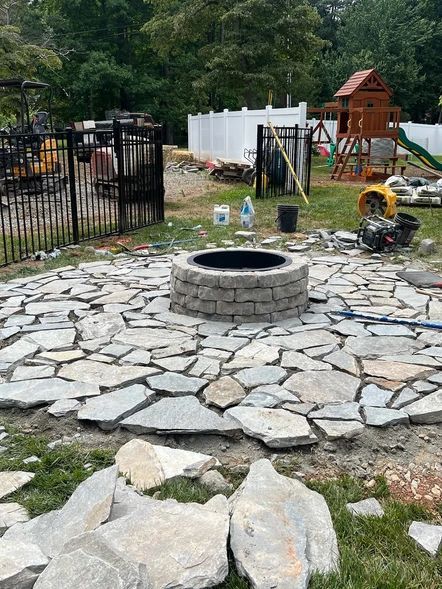
Stone installation involves different setting bed methods depending on whether the application is structural or decorative—load-bearing steps and walls require mortar or mechanical anchoring, while surface applications like patio veneers can be set on compacted aggregate bases. The material's porosity, cleft surface, and dimensional tolerance all affect which installation method works and how the stone weathers over time.
Request a detailed estimate based on the specific stone application and structural requirements for your project.
What You Notice Once Stone Work Is Finished
Stone work begins with surface preparation—existing grade is excavated, compacted bases are installed, and mortar beds or mechanical fastening systems are applied based on load and exposure. Each stone is set with joints that allow minor movement without cracking, and sealing decisions are made based on whether moisture absorption or slip resistance is the priority.
After installation, you'll see stone surfaces that shed water without absorbing excess moisture, steps with secure footing that don't shift under use, and walls with tight joints that resist infiltration during storms. The stone color stays consistent rather than developing moisture stains or efflorescence, and surfaces age without spalling or delamination in freeze-thaw cycles.
Stone projects also involve choosing between cleft and honed finishes based on slip resistance needs, deciding whether to seal porous stone in high-moisture areas like pool surrounds, and matching stone thickness to structural versus veneer applications. Stone selected purely for appearance often performs poorly when installed in load-bearing or high-exposure conditions without proper material specification.
What Property Owners Usually Ask
Homeowners investing in custom stone work around Lake Norman want to know about material performance, installation methods, and what separates decorative from structural applications.
What is the difference between natural stone and manufactured stone veneer?
Natural stone is quarried from bedrock and cut to size, with variations in color and texture inherent to the material, while manufactured stone veneer is cast concrete formed in molds to mimic natural stone appearance but without the same density or weathering characteristics.
How do you prevent natural stone from staining or absorbing moisture?
Sealing porous stone creates a barrier that repels water and reduces absorption, though sealers require reapplication every few years depending on exposure, and some stone types like dense granite require little or no sealing in outdoor applications.
Why does regionally sourced stone perform better in Denver?
Stone quarried in similar climate zones has already adapted to freeze-thaw cycles and humidity levels comparable to Lake Norman conditions, while imported stone from arid or tropical regions may absorb moisture differently and crack or spall when exposed to local temperature swings.
What stone types work best for outdoor steps and high-traffic areas?
Dense, low-porosity stone like granite or bluestone handles foot traffic and moisture exposure without wearing or becoming slippery, while softer sedimentary stone like sandstone can erode or absorb water in high-use applications.
How is stone installed differently for walls versus patios?
Walls require mortar joints or mechanical fastening to hold stone in place against gravity and lateral loads, while patio stone can be set on compacted aggregate bases with sand-swept joints if the application is decorative and not subject to vehicle traffic or heavy point loads.
BCB Hardscape selects stone based on how it performs in Lake Norman humidity and moisture exposure, with installation methods matched to structural versus decorative demands. Schedule a consultation to review material options and setting requirements for your outdoor space.