

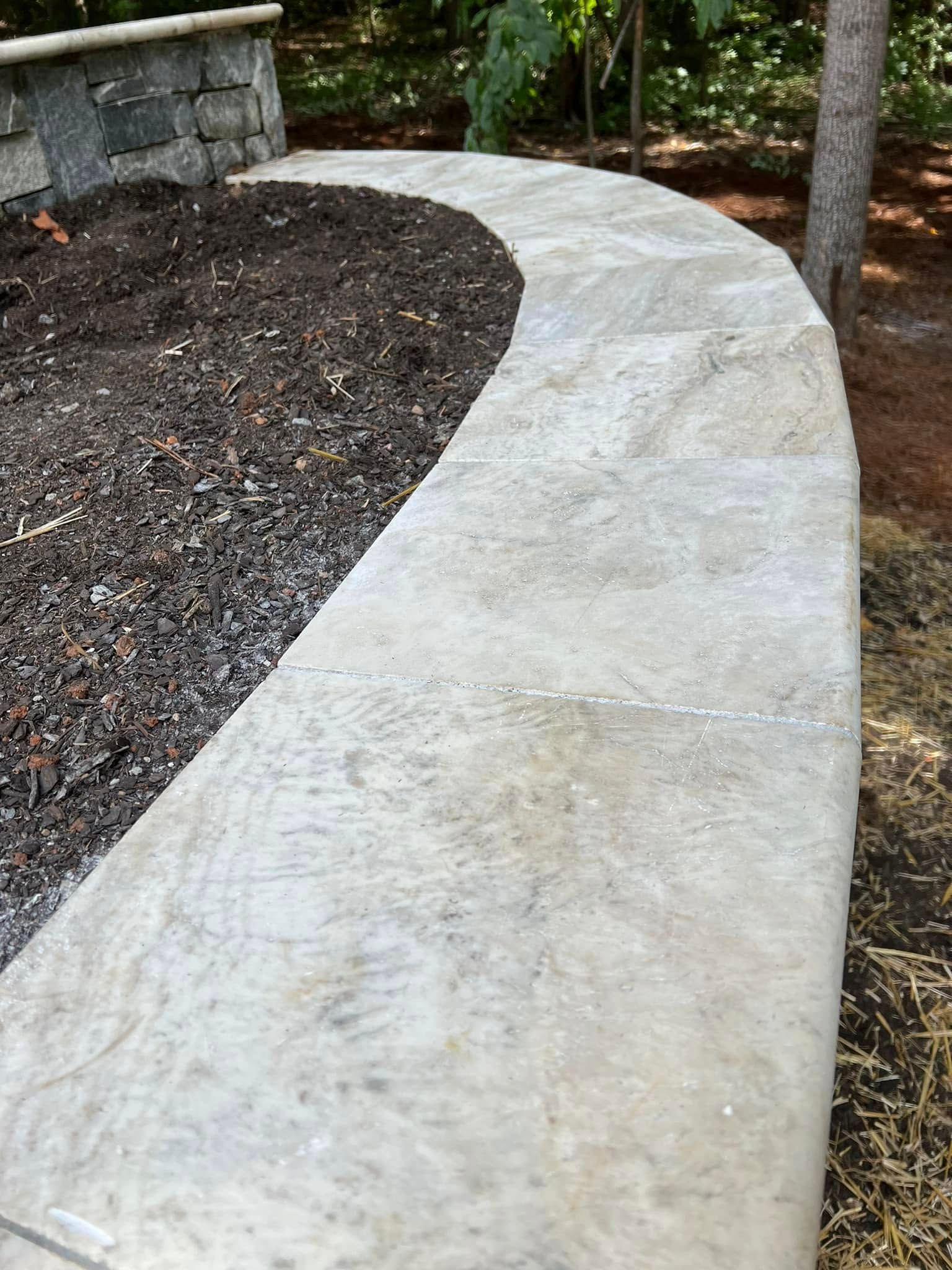
Surfaces That Stay Cool Under Bare Feet
Travertine in Denver for pool surrounds and lakefront patios where thermal properties and moisture exposure drive material and sealing decisions
Travertine's thermal properties keep surfaces comfortable barefoot during humid Lake Norman summers, which is why Cornelius and Denver lakefront homeowners choose it for pool decks and outdoor living areas where other materials become too hot to walk on. The stone doesn't absorb and radiate heat the way concrete or darker pavers do, making it functional in full-sun exposures around pools and docks. BCB Hardscape installs travertine with filled versus unfilled material selection and sealing decisions matched to poolside and lakefront moisture conditions, not just visual preference.
Installation involves setting travertine pavers on compacted aggregate bases with polymeric sand joints or mortar beds for wet-set applications, depending on whether the surface needs to handle pool splash, drainage requirements, and barefoot traffic. Filled travertine has its natural pits and voids packed with resin or cement during fabrication, creating a smoother surface, while unfilled travertine retains the open texture that some homeowners prefer for traction and authentic stone appearance.
Arrange an evaluation to review filled versus unfilled options and sealing recommendations for your pool or lakefront project.
Why Travertine Works for Poolside and Lakefront Conditions
Travertine installation begins with base preparation to ensure the surface drains properly and doesn't settle unevenly under moisture exposure, followed by paver placement with tight joints and sealing applied based on whether the stone will be exposed to chlorinated water, lake spray, or seasonal freeze-thaw cycles. Sealing reduces water absorption and staining but requires periodic reapplication depending on exposure intensity.
Once the installation is complete, you'll notice a surface that remains cool enough to walk on barefoot even in direct sun, pavers that shed water without developing slippery algae growth, and color that stays consistent rather than darkening from moisture absorption. The stone resists chipping from pool furniture and doesn't crack under freeze-thaw cycles when properly sealed and maintained.
Travertine projects also require decisions about edge detail where pavers meet pool coping or lawn transitions, whether to use bullnose or tumbled edge profiles, and how aggressively to seal based on whether barefoot traction or stain resistance is the priority. Unsealed travertine in high-chlorine or high-moisture environments can absorb chemicals and discolor, while over-sealed stone loses the texture that provides slip resistance when wet.
Common Questions About This Service
Homeowners installing travertine around Lake Norman pools and lakefront areas want clarity on material selection, sealing, and long-term maintenance in moisture-heavy environments.
What is the difference between filled and unfilled travertine?
Filled travertine has its natural pits and voids filled with resin or cement during manufacturing, creating a smoother surface with fewer trip hazards, while unfilled travertine retains the open texture and natural appearance but requires more frequent cleaning to prevent debris accumulation in the voids.
How do you prevent travertine from absorbing pool chemicals or lake water?
Sealing the stone creates a barrier that reduces absorption of chlorinated water, algae, and minerals, though sealers break down over time and need reapplication every two to four years depending on exposure and foot traffic intensity around the pool or dock.
Why does travertine stay cooler than concrete or pavers around pools?
Travertine's light color and lower thermal mass absorb less solar radiation and release heat faster than darker or denser materials, keeping the surface temperature lower even in full sun exposure during summer afternoons in Denver and Cornelius.
How is travertine installed differently for pool decks versus patios?
Pool deck installations require tighter drainage control and often use sloped setting beds to direct water away from the pool edge, while patio installations can use more forgiving base systems if standing water and chemical exposure aren't constant concerns.
What maintenance does travertine require in Lake Norman's humid climate?
Periodic sealing to maintain water and stain resistance, occasional pressure washing to remove algae or mildew in shaded areas, and sweeping to clear debris from unfilled voids are the primary maintenance tasks, with resealing intervals based on how much moisture and chemical exposure the stone receives.
BCB Hardscape specifies filled versus unfilled travertine and sealing methods based on Lake Norman poolside and lakefront moisture exposure, with decisions made for long-term performance rather than installation convenience. Request a consultation to review material options and sealing strategy for your outdoor surface.