
Surfaces Built to Handle Red Clay Settling
Pavers in Denver for driveways, patios, and pool decks that stay level on expansive clay soil
Red clay soil expands when wet and contracts when dry, a cycle that shifts paver surfaces and creates uneven walkways and sunken patio edges across Denver and Mooresville properties. BCB Hardscape installs pavers with base preparation engineered for Lake Norman's red clay and freeze-thaw conditions, addressing the soil movement that causes most local paver failures. You'll see the difference in gravel depth selection and compaction passes—structural decisions that determine whether your driveway holds level for years or develops low spots after the first heavy rain.
The work involves excavating to a depth that accommodates multiple gravel layers, each compacted in stages to create a stable foundation that resists clay expansion beneath your pavers. This base preparation accounts for soil type and site drainage patterns specific to your lot, preventing the settling and shifting that occur when base depth is guessed rather than calculated for red clay conditions. What you walk on is only as stable as what sits underneath it.
Schedule a property evaluation to identify specific base preparation requirements for your site conditions.
What Proper Base Preparation Requires
Base preparation begins with soil assessment—testing moisture content and compaction resistance to determine how much gravel depth your clay soil requires to prevent future movement. The gravel goes down in lifts, with each layer compacted using a plate compactor that applies measured pressure across the entire surface before the next layer is added. This staged compaction creates a rigid platform that distributes weight evenly and resists the upward pressure clay soil exerts during wet periods.
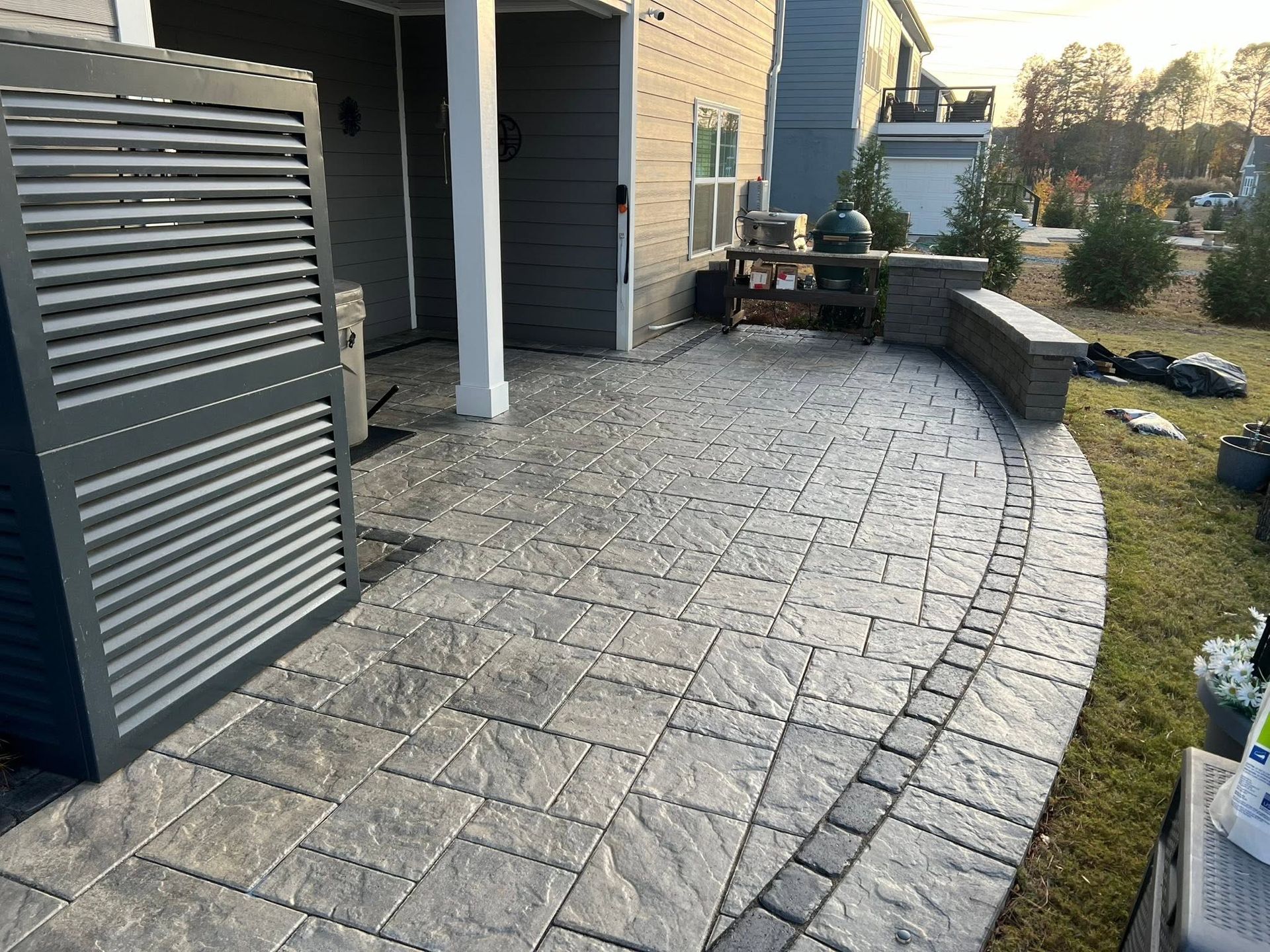
Once the pavers are set and edge restraints installed, you notice immediate changes in how water moves across the surface—runoff flows toward drainage points instead of pooling in low spots, and the entire field remains level during rain events. The pavers stay locked in position because the base beneath them doesn't shift, compress, or develop voids where settling can start. Your driveway handles vehicle weight without developing ruts, and patio edges stay flush with surrounding lawn areas instead of sinking below grade over time.
The installation includes joint sand application and compaction, which fills the gaps between pavers and adds interlock strength, but the base engineering is what determines long-term performance on Lake Norman clay-heavy lots. Paver selection—material type, thickness, and color—affects appearance, but the structural work happens before the first paver is placed.
Questions Before Starting Your Project
Property owners around Lake Norman usually ask about the installation process, timing, and how local soil conditions affect the work.
What preparation happens before pavers are installed?
The site is excavated to remove existing soil down to the depth required for gravel base layers, which varies based on soil type and intended use—driveways require deeper bases than walkways. Edge forms are set to define the paver field perimeter, and gravel is placed in stages with compaction between each lift.
How does red clay soil in Denver affect paver installation?
Red clay expands when it absorbs moisture and contracts during dry periods, creating upward and lateral pressure that shifts improperly supported pavers. Base preparation for clay soil requires additional gravel depth and more compaction passes to create a stable platform that resists soil movement beneath the paver surface.
When should paver installation be scheduled?
Installation works best during dry weather when soil moisture is low and compaction equipment can achieve maximum density in base layers, typically late spring through early fall in the Lake Norman area.
What affects the cost of paver installation?
Base depth requirements, site accessibility for equipment, grading complexity to manage drainage, and total square footage all influence project cost—larger areas reduce per-square-foot pricing, but challenging soil conditions increase base preparation time.
How long do pavers last on clay soil?
Pavers themselves can last decades, but performance depends entirely on base preparation—properly compacted gravel bases on clay soil prevent the settling and joint separation that cause most paver failures within the first five years after installation.
BCB Hardscape handles paver installations across the Lake Norman area with base preparation matched to the soil and drainage conditions your property presents. Request a detailed estimate based on your current site conditions and intended paver use.