

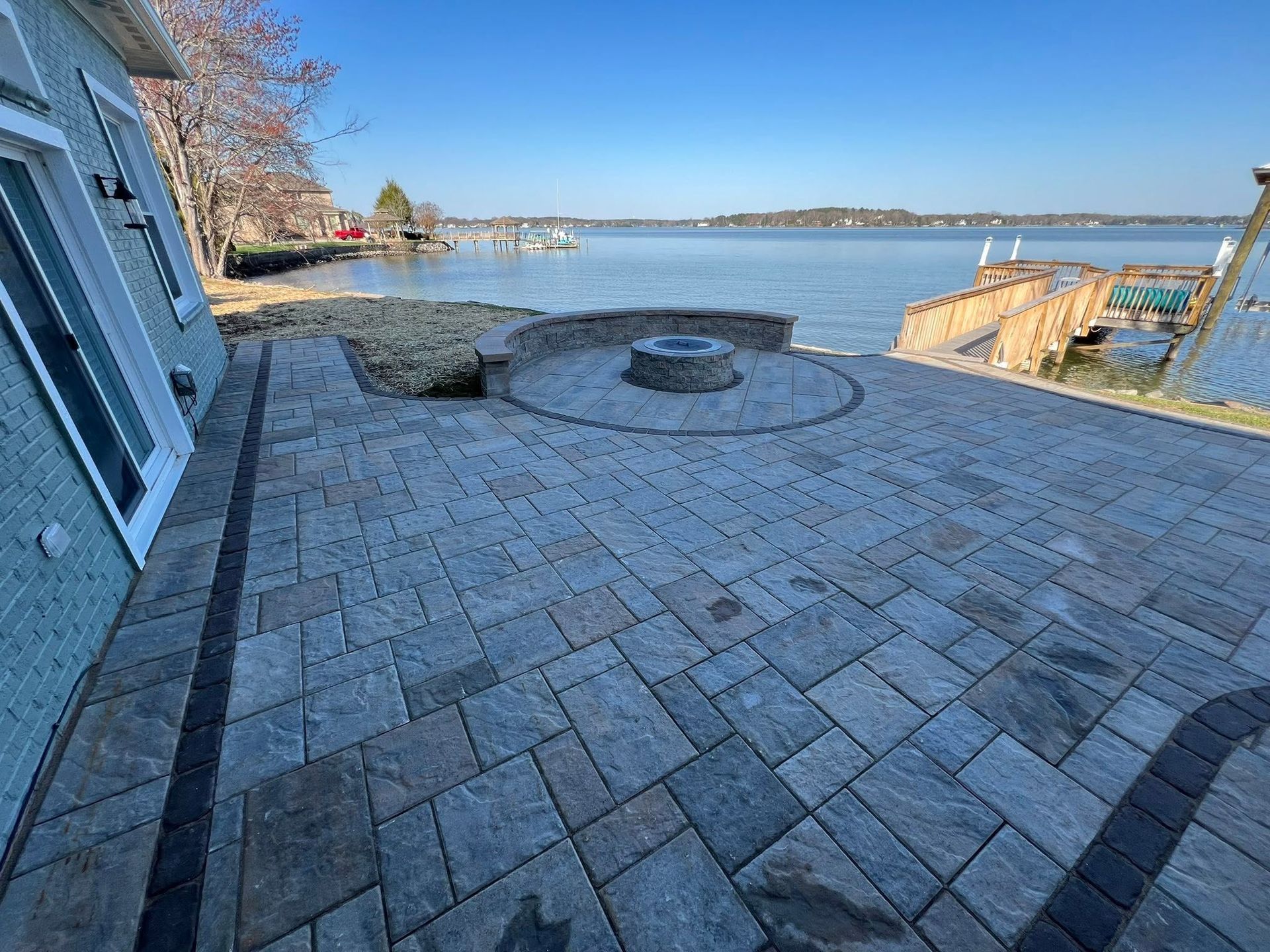
Fire Features That Integrate With Hardscape Systems
Fire Features in Denver for outdoor living spaces where fire pits and fireplaces function year-round in Lake Norman's mild winters
Lake Norman's mild winter climate drives year-round outdoor living demand, making fire features a functional investment rather than a seasonal luxury for properties in Denver and Huntersville. Fire pits and outdoor fireplaces extend patio usability into cooler months, but performance depends on structural integration with existing hardscape—footings sized for the feature's weight, gas line placement that doesn't interfere with drainage, and paver patterns adjusted to accommodate fire pit dimensions without awkward cuts or narrow joints. The work involves coordination between hardscape installation and gas line routing, not simply setting a prefabricated unit on finished pavers and hoping it stays level.
BCB Hardscape installs fire features as part of integrated patio and outdoor living designs, treating them as structural elements rather than standalone add-ons. Gas line installation requires trenching from the house supply to the fire feature location, with depth and routing planned to avoid conflicts with irrigation, landscape lighting, or drainage systems already present on your property. Wood-burning options require different footing designs to support masonry fireplace weight and clearances from combustible materials that gas units don't demand.
Request a detailed estimate based on your current patio layout and preferred fire feature type.
What Changes After Fire Feature Installation Completes
Structural integration begins with footing excavation beneath the fire feature footprint, extending below frost depth to prevent settling when clay soil freezes during occasional hard winters around Lake Norman. Gas lines are pressure-tested before backfill, and valve locations are positioned for accessible shutoff without requiring you to reach into active flame areas. Paver fields are laid with the fire feature location planned from the start, so joint lines remain consistent and cuts align with the feature perimeter rather than creating irregular gaps.
You notice the fire feature sits level with surrounding pavers and doesn't rock or shift when leaned against, because the footing beneath it bears weight independently of the paver base. Gas ignition systems activate reliably without requiring multiple attempts, and flame height adjusts smoothly through the entire range without sputtering or uneven burn patterns. The fire feature becomes a natural gathering point on the patio, with seating areas positioned at comfortable distances where heat reaches without forcing people to move back from intense radiant output.
Gas-fired units include manual shutoff valves and, depending on design, electronic ignition systems that eliminate the need for standing pilot lights. Wood-burning fireplaces require ash cleanout access and chimney height sufficient to draft smoke away from seating areas, factors that affect placement and structural design during installation.
Answers to Frequent Service Questions
Property owners considering fire features typically ask about fuel options, integration with existing outdoor spaces, and what the installation process involves.
What is the difference between gas and wood fire features?
Gas fire features ignite with a switch or electronic control and produce consistent flame height without ash cleanup, while wood-burning options require fuel stocking and ash removal but deliver authentic wood smoke aroma and crackling sound. Gas units need supply line access from your home's natural gas or propane system, while wood-burning fireplaces require chimney structures and larger footings to support masonry weight.
How are fire features integrated into existing patios?
Integration depends on whether the patio is already built or under construction—new installations allow footings and gas lines to be placed before pavers go down, while retrofits require cutting into finished paver fields to excavate footings and trench for gas supply, then patching with matching pavers around the feature perimeter.
What footing requirements do fire features have?
Footings extend below frost depth and spread the feature's weight across a larger soil area to prevent settling on Denver's red clay, which compresses unevenly under concentrated loads. Gas fire pits typically require smaller footings than full masonry fireplaces, which can weigh several thousand pounds and demand reinforced concrete bases.
When should fire feature installation be scheduled in Denver?
Installation timing aligns best with patio construction or major hardscape renovations, when excavation equipment is already on-site and gas line trenching can occur without damaging finished lawn areas. Year-round mild temperatures mean the work itself isn't season-dependent.
How much clearance does a fire feature need from seating areas?
Clearance depends on fuel type and heat output—gas units with adjustable flame height allow closer seating than wood-burning fireplaces that produce higher radiant heat, but most designs position seating four to six feet from the flame perimeter to balance warmth with comfort.
BCB Hardscape builds fire features into outdoor living spaces across Lake Norman with footing and gas line coordination matched to your patio layout and fuel preference. Schedule a property consultation to review integration options for your existing or planned hardscape system.