

Lighting That Works on Wooded Lakefront Properties
Landscape Lighting in Denver for hardscape, trees, and walkways on Lake Norman shoreline and wooded lots
Wooded lots and waterfront properties create lighting challenges that standard fixture placement can't solve—dense tree canopies block ambient light, reflective lake surfaces create glare, and shadow patterns shift as you move through outdoor spaces. You need fixture angles and beam spreads calculated for the specific materials and elevations present on your property, not a generic spacing formula applied without regard for how light behaves on travertine versus natural stone or how tree trunks interrupt sight lines at night. BCB Hardscape designs landscape lighting for Lake Norman outdoor living areas where technical placement decisions determine whether fixtures add functionality or just create more shadows.
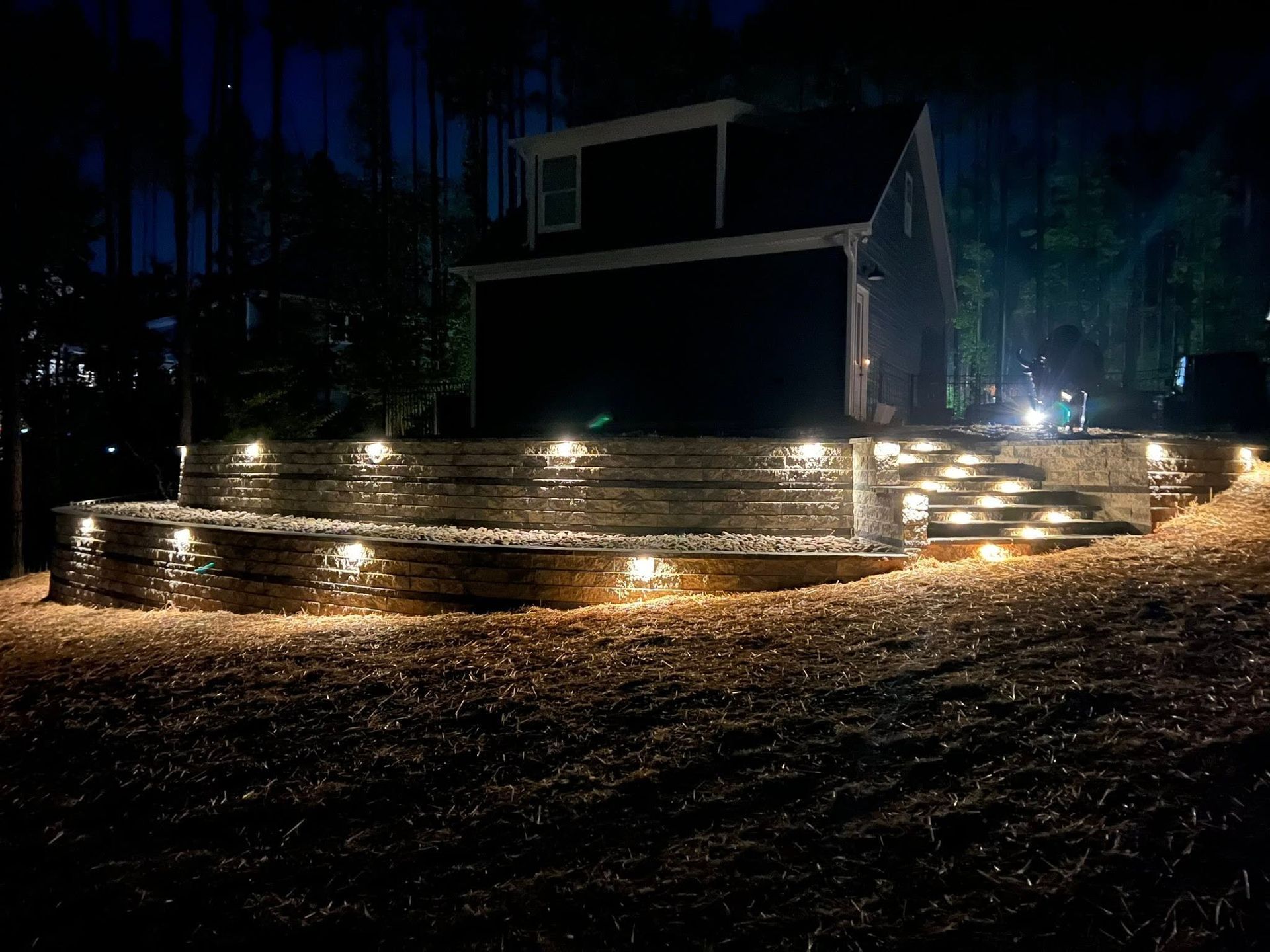
The installation uses low-voltage systems with transformers sized to match total fixture load and wire runs calculated to prevent voltage drop across long distances common on lakefront lots. Fixture selection accounts for Lake Norman's humid summers, which require moisture-rated housings to prevent corrosion and connection failures that occur when standard fixtures are used in high-humidity environments. Grazing techniques highlight stone texture on retaining walls, while uplighting illuminates tree canopies without creating glare points visible from seating areas.
Arrange an on-site consultation to review fixture placement options for your specific outdoor layout and hardscape materials.
How Fixture Placement Addresses Lakefront Lighting Challenges
Placement strategy starts with identifying functional zones—walkways that need consistent illumination for safe footing, seating areas that benefit from indirect ambient light, and landscape features like stone walls or specimen trees where directed beams add visual depth. Fixtures are positioned based on beam angle and distance to target, with adjustments made for reflective surfaces near the lake that amplify light output and can create unwanted glare if fixtures are aimed incorrectly.
After installation, you notice walkways remain visible without bright spots that wash out peripheral vision, and patio areas receive enough light to move comfortably without fixtures shining directly into sight lines when you're seated. Hardscape textures become more pronounced at night as grazing light reveals stone edges and paver joints, and tree canopies gain dimension from uplighting that doesn't spill over into neighboring properties or reflect off lake water. The system operates on a transformer timer, so lighting activates automatically at dusk without manual intervention.
Wire burial depth and fixture positioning account for future landscape maintenance—mowers and trimmers won't catch on fixture heads, and wire runs avoid root zones where digging could sever connections. Bulb replacement and fixture adjustments remain accessible without excavating hardscape or disturbing plantings.
Common Questions About This Service
Homeowners across Denver and Mooresville typically want to know about system design, maintenance, and how lighting integrates with existing outdoor features.
What happens during the lighting design process?
The site is evaluated for existing light sources, hardscape materials, tree placement, and functional zones that need illumination. Fixture types and placement locations are selected based on beam angles required to light specific features without creating glare or shadow gaps.
How does humidity in the Lake Norman area affect landscape lighting?
High summer humidity accelerates corrosion in fixture connections and housings that aren't rated for moisture exposure, leading to premature failures and flickering. Moisture-rated fixtures with sealed connections prevent these issues in lakefront and heavily wooded areas where humidity remains elevated.
When is the best time to install landscape lighting?
Installation can occur year-round, but coordinating with hardscape projects allows wire runs to be placed during excavation, avoiding the need to trench through finished lawns or paver fields later.
What maintenance does a landscape lighting system require?
Bulbs need periodic replacement based on burn hours, typically every few years for LED fixtures, and lenses should be cleaned seasonally to remove pollen and debris that reduce light output. Transformers and timers require minimal maintenance beyond occasional setting adjustments.
How is low-voltage lighting different from standard outdoor lighting?
Low-voltage systems operate at twelve volts instead of one hundred twenty volts, reducing shock risk and allowing safer installation near water features or high-traffic areas. Transformers step down household voltage, and wire sizing must account for run length to prevent brightness loss at fixtures farthest from the power source.
BCB Hardscape installs landscape lighting designed for the shadow and moisture challenges Lake Norman properties present. Schedule a site review to assess fixture placement strategies for your outdoor space and existing hardscape.