
Outdoor Walls That Hold Grade and Seat Guests
Sitting Walls in Denver for lakefront patios and sloped properties where grade transitions meet usable outdoor space
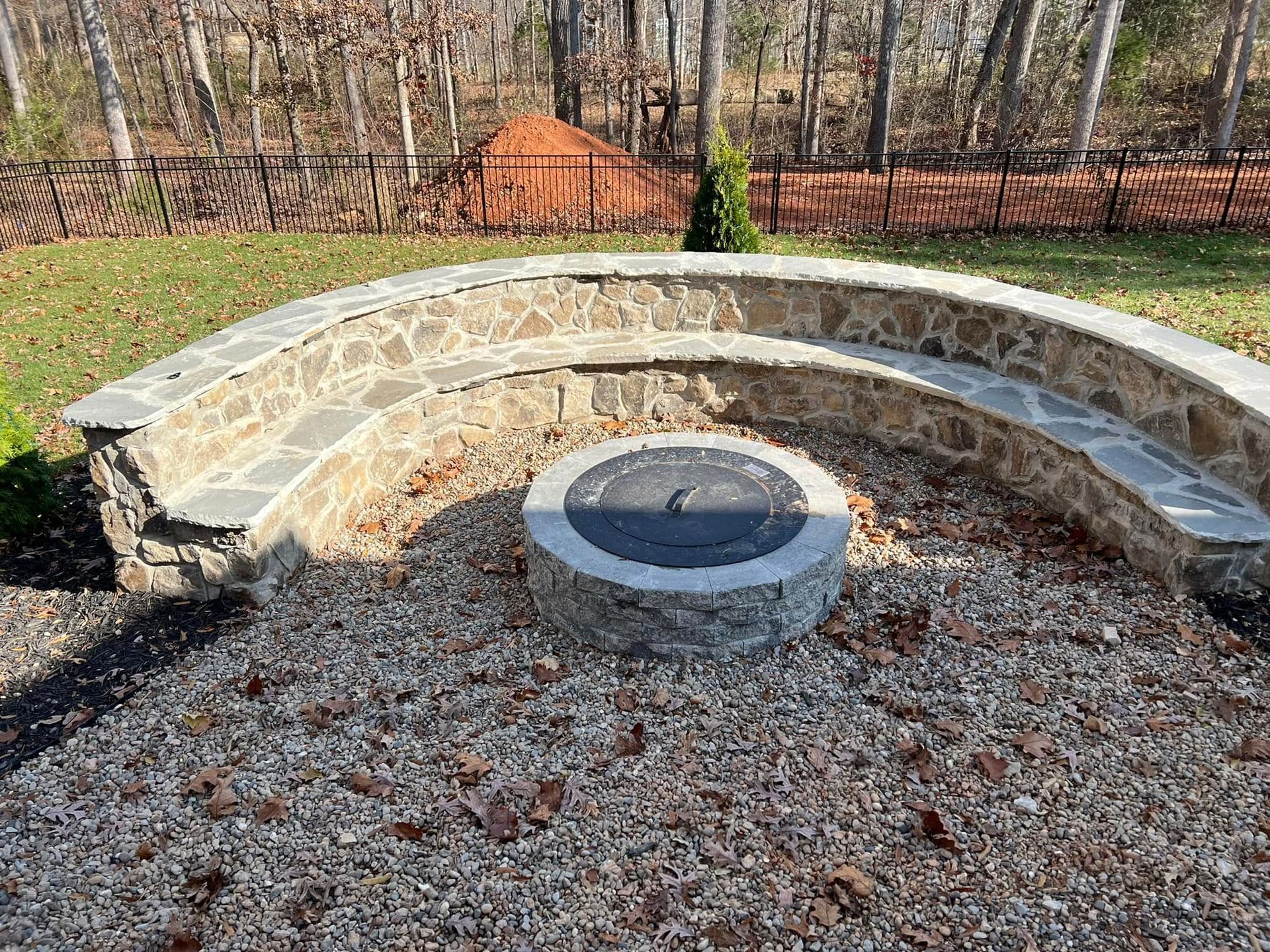
Uneven lakefront grades around Lake Norman turn sitting walls into functional grade solutions as much as decorative patio edges. BCB Hardscape builds sitting walls for Denver and Cornelius residential properties where elevation changes require structural transitions, not just ornamental stone borders. You'll see the wall hold the grade while providing seating along patios, fire pit areas, and garden beds.
The installation involves setting mortared stone or block on compacted bases, with cap stone selection and mortar mix formulated to handle seasonal temperature swings and freeze-thaw cycles common in this region. Mortar that isn't mixed for thermal expansion cracks and spalls within two winters, leaving loose caps and water infiltration that undermines the entire structure.
Schedule a property evaluation to review grade conditions and cap stone options for your outdoor space.
What Proper Sitting Wall Installation Requires
The base preparation determines whether the wall settles or holds level through wet clay seasons and winter freeze cycles. You'll see compacted aggregate under the first course, with mortar joints between each stone layer and cap stones set with overhang and drip edge details that shed water away from the wall face.
Once the wall is finished, you'll notice a stable seating surface that doesn't shift when weight is applied, cap stones that remain secure through temperature changes, and a grade transition that prevents soil migration behind the patio edge. The wall holds its position without leaning or cracking at the joints, and runoff moves away from the base rather than pooling against the stone.
Sitting wall projects also include decisions about wall height relative to seating comfort, whether to tie the wall into adjacent hardscape features, and cap stone texture selection based on barefoot traffic or decorative-only applications. Walls built purely for looks often skip reinforcement steps that matter when the structure also manages grade.
Questions Before Starting Your Project
Property owners working on Lake Norman outdoor spaces typically ask about materials, timing, and what the wall actually accomplishes on sloped lots.
What is the difference between a sitting wall and a retaining wall?
A sitting wall is a low structure designed for seating and decorative patio edges, typically under three feet tall, while retaining walls are engineered to hold back significant soil loads on sloped properties and require drainage and reinforcement systems.
How do you prevent cap stones from loosening over time?
Cap stone stability depends on mortar mix formulated for freeze-thaw cycles and proper overhang that sheds water away from the joints, preventing moisture infiltration that causes spalling and separation during temperature swings.
When should sitting wall installation be scheduled in Denver?
Installation works best during dry months when the base can be compacted without excess moisture, though mortar curing requires temperatures above freezing, making late spring through early fall the most reliable window for Lake Norman properties.
What affects the cost of sitting wall installation?
Material choice between natural stone and manufactured block, wall length and height, site access for equipment, and whether the wall ties into existing hardscape or requires separate base preparation all influence final project cost.
How do sitting walls handle lakefront humidity and moisture?
Mortar joints and cap stone installation must account for high humidity exposure near the lake, with sealing decisions and drainage details that prevent moisture from degrading the structure over time.
BCB Hardscape builds sitting walls as structural grade transitions engineered for Lake Norman conditions, not purely decorative add-ons. Request a detailed estimate based on your patio layout and grade requirements.