
Outdoor Structures Built for Lakefront Humidity
Wood Decks & Pergolas in Denver for properties where Lake Norman moisture and freeze-thaw cycles accelerate wood deterioration
High humidity around Lake Norman and occasional hard freezes accelerate wood decay, making material species and treatment selection critical decisions that determine whether your deck or pergola lasts a decade or requires replacement within five years. Pressure-treated lumber handles moisture differently than cedar or composite decking, and lakefront properties face higher humidity exposure than inland lots in Sherrills Ford, affecting which materials perform best for your specific site conditions. BCB Hardscape builds wood decks and pergolas with material choices matched to Lake Norman's humidity and freeze-thaw environment, addressing the climate factors that cause premature rot and structural failures when generic builds ignore local conditions.
The construction process involves selecting wood species and treatment levels based on proximity to the lake and sun exposure—lakefront locations demand higher preservative retention ratings to resist moisture penetration, while shaded wooded areas require different rot-resistance strategies than decks in full sun that dry quickly after rain. Structural framing uses fasteners rated for exterior moisture exposure, and joist spacing accounts for decking material deflection characteristics to prevent bounce or sagging between supports.
Arrange a property consultation to review material options and structural requirements for your site's humidity exposure and intended deck or pergola use.
What Proper Material Selection Requires
Material selection begins with evaluating your property's microclimate—lakefront locations with direct water exposure and limited airflow retain moisture longer than elevated wooded lots where breeze circulation helps wood dry between rain events. Pressure-treated southern yellow pine offers high rot resistance when treated to the correct retention level, but requires time to dry before staining or sealing can be applied. Cedar and redwood contain natural oils that resist decay but cost more and require periodic treatment to maintain weather resistance, while composite decking eliminates wood maintenance but demands different fastening techniques and joist spacing to prevent thermal expansion problems.
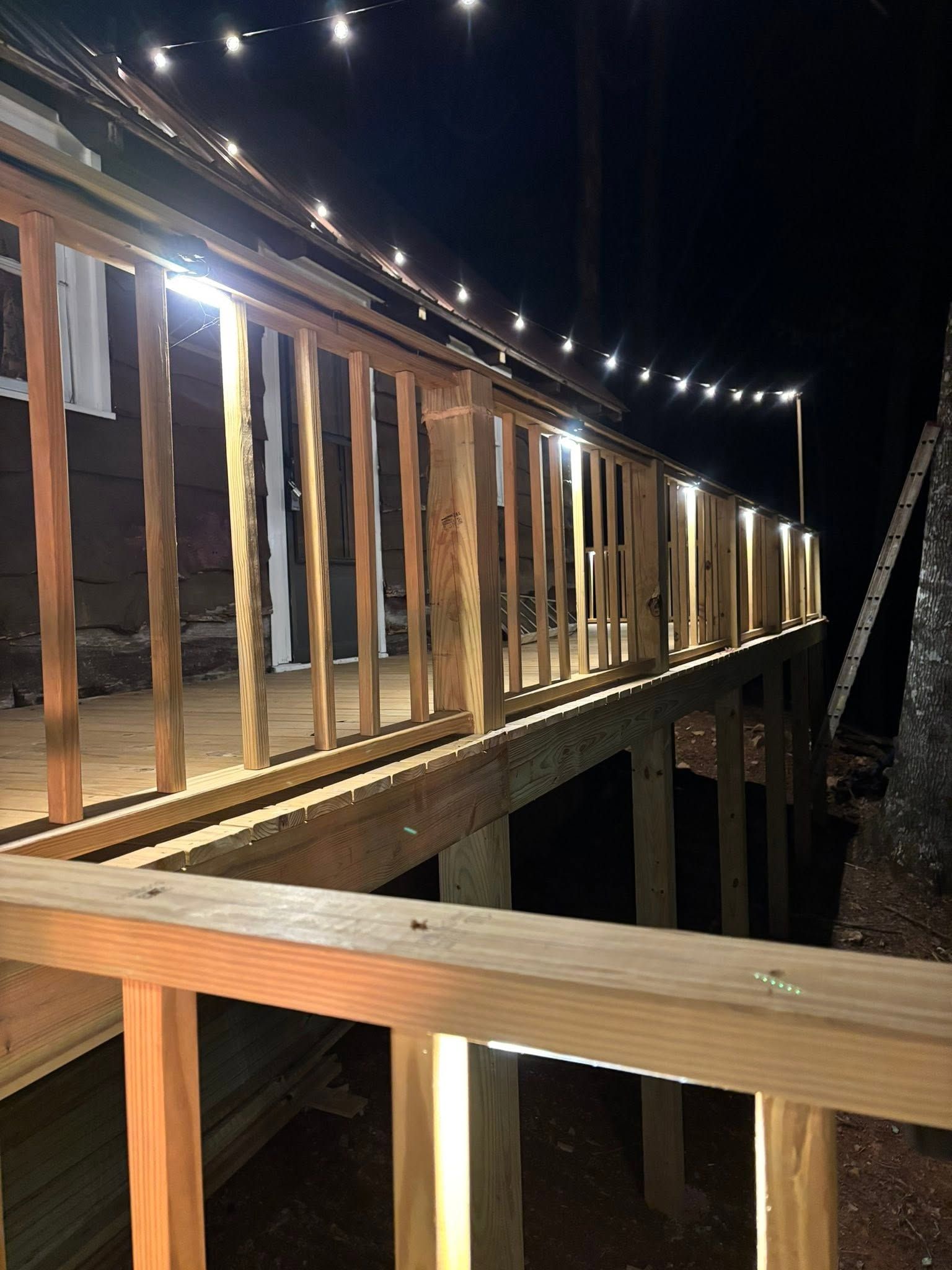
Once construction finishes, you notice the deck surface drains quickly without water pooling between boards, because spacing between decking planks allows runoff to pass through and joists are sloped slightly to direct water away from the house. The structure feels solid underfoot without flex or movement, and railings don't wobble when leaned against because posts are anchored with hardware that resists withdrawal as wood expands and contracts through seasonal moisture cycles. Pergola beams remain straight and level without warping, because material was selected and stored to minimize moisture content before installation.
Deck construction includes flashing where the ledger board attaches to your home, preventing water intrusion that causes wall rot behind the attachment point. Pergola designs account for wind load and snow load, even though Lake Norman snow events are infrequent, because occasional heavy wet snow creates structural demands that undersized beams can't handle safely.
Questions Before Starting Your Project
Homeowners around Lake Norman typically ask about material durability, design options, and how local climate affects construction decisions.
What wood species work best for Lake Norman decks?
Pressure-treated southern yellow pine offers strong rot resistance at lower cost when treated to retention levels appropriate for ground contact or high-moisture exposure, while cedar and redwood provide natural decay resistance and attractive grain but require more frequent maintenance. Composite decking eliminates wood rot concerns but costs more upfront and requires careful installation to manage thermal expansion in full sun exposure.
How does humidity affect wood deck longevity in Denver?
High humidity keeps wood moisture content elevated, creating conditions where decay fungi thrive and accelerating rot in areas where water sits against wood surfaces. Proper material treatment, adequate ventilation beneath the deck, and fastener corrosion resistance all extend lifespan in humid lakefront conditions.
What structural considerations apply to pergola construction?
Pergolas need post footings below frost depth to prevent heaving during freeze-thaw cycles, and beam sizing must account for span distance and spacing to prevent sagging under their own weight. Wind load calculations affect how posts are anchored and whether diagonal bracing is needed for lateral stability.
When should deck or pergola construction be scheduled?
Construction works year-round, but wood moisture content is typically lower during late summer and fall, allowing treated lumber to dry faster before finishing treatments are applied. Scheduling during dry weather also makes excavation for footings easier in red clay soil.
How much maintenance do wood decks require?
Pressure-treated decks need annual inspection for fastener corrosion and board deterioration, with sealing or staining every two to three years to maintain moisture resistance. Cedar and redwood benefit from similar treatment schedules, while composite decking requires periodic cleaning but no sealing or staining.
BCB Hardscape builds wood decks and pergolas across the Lake Norman area with material selections made for the specific humidity and freeze-thaw exposure your property faces. Schedule an on-site review to assess structural options and material choices for your outdoor living goals and lot conditions.