

Stop Water Before It Erodes Your Yard
Drainage Solutions in Denver for sloped Lake Norman lots where red clay soils hold standing water and wash out under storm runoff
Standing water on red clay yards isn't just inconvenient—it erodes soil, undermines hardscape, and floods foundations during heavy rain. BCB Hardscape installs drainage solutions for Denver and Mooresville residential properties where storm runoff creates persistent pooling, washouts, and saturated areas that won't dry between rain events. French drains, channel drains, and grading corrections are evaluated site-specifically before any material goes in the ground.
The diagnosis process identifies where water enters the property, where it pools, and where it needs to discharge, with solutions matched to slope angle, soil permeability, and runoff volume. A French drain works for subsurface water collection, while channel drains handle surface flow across driveways and patios, and grading corrections redirect water before it reaches problem areas.
Schedule a site evaluation to identify drainage failure points and the right correction method for your property.
What Changes After Drainage Systems Are Installed
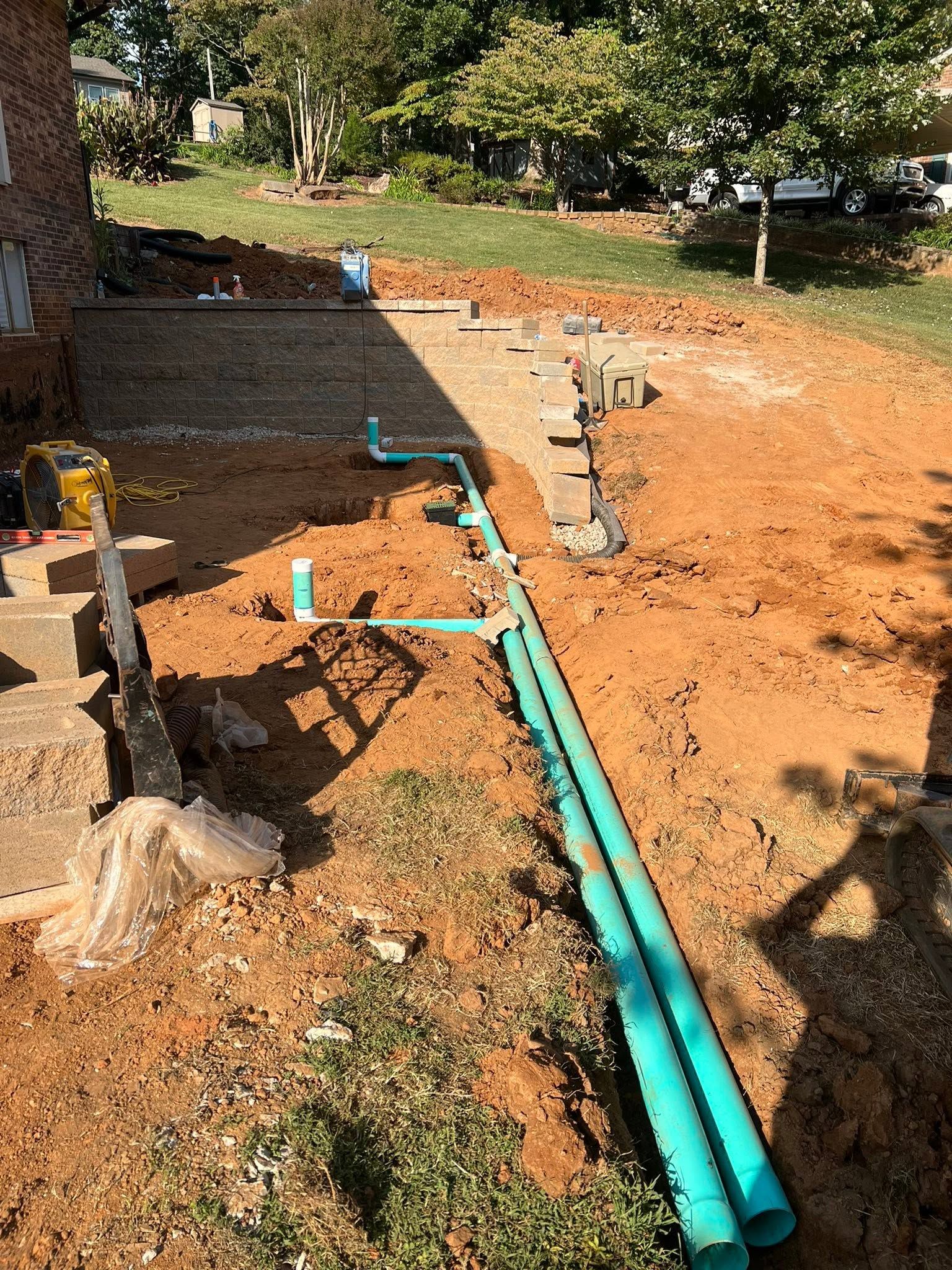
Drainage installation begins with trench excavation along the water path, perforated pipe placement surrounded by crushed stone aggregate, and outlet routing to daylight discharge points or existing stormwater systems. Channel drains are set into hardscape surfaces with grated tops that capture sheet flow before it pools or erodes adjacent areas.
Once the system is installed, you'll notice yards that dry faster after storms, no standing water in low spots where pools previously formed, and soil that stays in place instead of washing into drainage swales or against foundations. Patios and driveways shed water into collection points rather than holding puddles, and basement or crawlspace moisture problems tied to exterior saturation improve as water is routed away from the structure.
Drainage projects also require decisions about whether to tie into municipal storm systems or discharge to natural grade, whether surface or subsurface collection is appropriate, and how to handle seasonal flow volume increases during wet months. Solutions that address symptoms without diagnosing water source and path often move the problem rather than eliminating it.
Answers to Frequent Service Questions
Homeowners dealing with wet yards and erosion on Lake Norman properties want to know how drainage systems work and what actually fixes the problem.
What is the difference between a French drain and a channel drain?
A French drain is a subsurface trench filled with gravel and perforated pipe that collects groundwater and runoff soaking into the soil, while a channel drain is a surface grate installed in hardscape that captures sheet flow before it pools or runs off uncontrolled.
How do you know which drainage solution is needed for a property?
Site diagnosis involves walking the lot during or after rain to observe where water enters, where it collects, and where it currently discharges, with solutions selected based on whether the problem is surface runoff, subsurface saturation, or grading that directs flow toward structures.
Why does red clay cause drainage problems in Denver?
Red clay has low permeability and compacts easily, preventing water from soaking in and forcing runoff to move across the surface where it pools in low spots, erodes slopes, and saturates areas adjacent to foundations and hardscape.
How long does it take for a drainage system to start working?
French drains and channel drains function immediately once installed, though saturated soil may take several days to fully drain depending on how long the problem existed and how much moisture is trapped in the clay.
Where does water collected by drainage systems discharge?
Water is routed to daylight outlets at the property edge where it can flow to natural grade, or tied into existing stormwater infrastructure if available and permitted, ensuring water moves off the lot without creating new problems downstream.
BCB Hardscape diagnoses drainage problems before defaulting to one solution, identifying the right method for the site rather than installing French drains everywhere. Arrange a consultation to review water flow patterns and correction options for your lot.